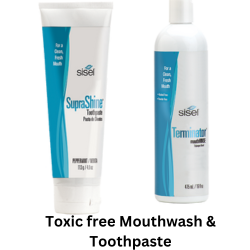
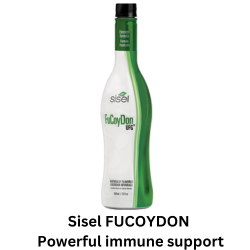
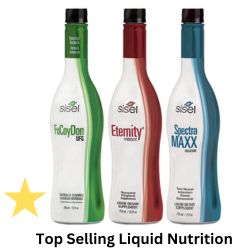
Sisel International Products. Shop Online for Sisel Products. Sisel Health, Wellness, & Fitness Products are 100% Toxin Free! Sisel offers all-natural, non-toxic, safe, health and nutritional supplements including home, beauty and personal care products. Sisel Products can be purchased through this website for customers in the United States, Australia, New Zealand, Canada, Europe, UK, and Taiwan.
Feeling sluggish? Aging faster than time? Misplaced your vitality? Unsatisfied with your appearance? Sisel has the products for you! As a GLOBAL Sisel Distributor who has been using and promoting Sisel International Products for 11+ years, I can tell you all about the company, products, ingredients, business opportunity, compensation plan, and more! The Btoxicfree website is dedicated to all things Sisel. I started this site in 2011!
About Sisel (also called Sisel International or Sisel intl)
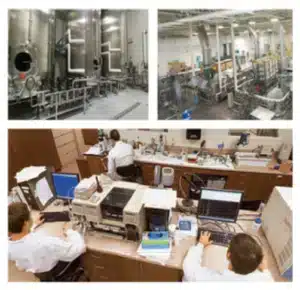
Sisel is a privately held manufacturing and product research company. World Class Production: Sisel manufactures all of its products in a highly-advanced, 300,000 plus square foot facility. Sisel is able to oversee the production process, from the quality of the natural ingredients, to the final bottling and packaging. In this incredibly sophisticated plant, Sisel uses recyclable materials and non-toxic ingredients, allowing it to keep its promise to produce only Sisel Safe® products that are reliably safe, effective, and good for the planet.
Sisel’s manufacturing plant is called SupraNaturals and is conveniently located next door to the Sisel Customer Service Office in Utah, United States. SupraNaturals manufactures for over 80 other companies including many well-known MLM companies.
Sisel Name
S.I.S.E.L – Sisel stands for Science, Innovation, Success, Energy and Longevity. This acronym is used to represent the key foundational principles of the company.
What does Sisel mean?
What is Sisel? and what does Sisel mean? Sisel also referred to as Sisel International is a global health and wellness company based in Springville, Utah.
Sisel was established as a visionary enterprise of product development, manufacturing, and distribution that ensures the Mower Mission spreads and flourishes around the world. Sisel stands for Science, Innovation, Success, Energy, and Longevity. Sisel holds true to the mission of creating health, wealth, and happiness for business builders and customers around the world

SISEL Products ALL COUNTRIES
15 Reasons to BUY your Sisel Products through my Website BTOXICFREE
Getting Started with Sisel
Sisel provides products directly to the consumer with no middlemen. Customers (also referred to as Preferred Customers) can buy direct online. Simply register your name and address, select from the sisel catalog and the products are shipped directly to you (see countries we are open in below). For those looking for discounted products at a saving they can register as a Sisel Distributor and enjoy a 10% discount along with other savings including shipping rebates. Registering as a Sisel distributor does not mean you have to distribute the Sisel products. You can just enjoy the product savings with no obligation to share the products.
But what if you are interested in earning extra income? Sisel has a generous compensation plan with a stable, secure future. The Sisel Company has been placed into a 99 year dynasty trust. So you know the Sisel Company plans are long term!
Sisel’s compensation plan offers notable features that set it apart from others in the industry. These features create a unique opportunity that rewards hard work and promotes fairness and equality. Sisel is a 100% debt-free company. Few companies of this magnitude can make that claim. This ensures that partnering with Sisel aligns you with a community focused on financial stability, security, responsibility, and prosperity.
Who owns and runs Sisel?

Sisel is owned by the Mower family. Tom Mower Jr is the CEO of Sisel and a two-time Genius award winner for product formulations in Utah. Tom has a bachelor’s degree in Biology from the University of Utah. He is an experienced product formulator, scientist and product engineer. Tom has developed some of the best-selling products in the health and wellness industry.
Sisel was founded and is led by industry leaders with over a century of combined experience in effective marketing strategies, powerful recruiting programs, crucial success training, innovative product development, and billions of dollars in sales. The founders, Tom Mower, Sr. and Tom Mower, Jr. have been two of the most iconic figures in health and wellness for over 30 years.
Tom Mower Jr was instrumental in helping his late father, Tom Mower Sr, build the well-known company Neways into a giant MLM success. Neways was used as a stepping stone to launching Sisel in 2006. The Mower Mission which unpinned Neways was transferred to Sisel along with the Mower’s as product formulators. Some of the same product formulations were kept almost identical. One example is Terminator which was referred to as Eliminator in the Neways range. Product users claim over 100 uses for this one formulation alone.
Tom Mower Jr is a dynamic speaker and presenter. Loved by customers and distributors around the world for his knowledge of nutrition effects on the human body. Tom regularly joins Sisel Products Training Calls.
A unique aspect of SISEL is “The Mower Mission”
In summary the Mower Mission is “A Life Long Commitment to building safe products“.
How did the Mower Mission come to be? Starting in the 1980’s (more than four decades ago), Tom Mower, Sr. had a shocking realisation: he discovered that many of the same harsh chemicals used to manufacture industrial strength cleaners and detergents were also used to produce common household personal care items. These chemicals were known to pose health risks when they came into contact with the skin. Tom wondered, “Why would products intended for the human body contain so many dangerous chemicals?”
Tom was determined to spread the word and find alternatives to these potentially harmful ingredients. Thus began his quest to reshape the health and wellness community with safety and science at the forefront, and the Mower Mission was born. Sisel have a promise that is, to never use potentially harmful ingredients in any product. In fact, Sisel maintains stringent safety standards that demand the highest levels of ingredient integrity. Sisel always provides products made from safe, effective, non-toxic ingredients to keep your family safe, healthy, and happy. Sisel follows the same criteria for every formula: remove the bad and replace it with the great, so you can use every Sisel product with peace of mind. Sisel products are packaged in BPA and phthalates-free containers. This level of control is all possible because Sisel manufactures, packages, and ships an array of products in-house. All raw ingredients are stored and mixed under the most rigorous of manufacturing standards. Even the water is purified on the premises, passing through an advanced treatment plant before being used in any of Sisel’s products. Sisel does all of this so that when you see a product with the Sisel Safe seal, you’ll know it’s safe and effective. Sisel Safe isn’t just a slogan—it’s a promise.
Why I use Sisel Products
Sisel uses cruelty-free ingredients which are sourced as organic where possible. I have been using the Sisel Product range of nutritional, beauty and personal care products for 12 years, since 2011. Sisel products are founded on the principles of the Mower Mission.
30 years ago, the late Tom Mower Sr. made a shocking discovery – harsh chemicals used in industrial cleaners were also present in daily personal care items, potentially causing harm to our skin. With his son Tom Jr., he set out on a mission to raise awareness and find safer alternatives. Thus began the historic movement – the Mower Mission – for health and wellness.
Both Tom Mower Jr and his late father Tom Mower Sr are two-time Utah genius award winners for product formulations. Tom Mower Jr (CEO of Sisel) has a Biology degree from the University of Utah and a wealth of experience as a formulator, scientist, and product engineer. He is recognized for crafting some of the most successful products in the health and wellness sector. Sisel products get results!
The Mower’s previous line of products (Neways) was independently reviewed and given the stamp of approval by the chairman of the Cancer Prevention Coalition. The products were featured in the book Unreasonable risk: How to avoid cancer from cosmetics and personal care products. Sisel’s all-natural, safe, non-toxic products produced by the Mowers are trustworthy and high-quality with a point of difference. They use ingredients in the amounts needed to be effective and do not fairy-dust ingredients. Furthermore, all Sisel products are animal cruelty-free.
In summary Sisel has safe, effective products with unique product lines containing more than 50 different products, Sisel supports wellness in all aspects of everyday life, from healthier nutritional supplements to safer home cleaning.
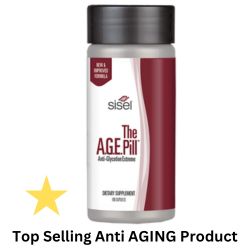
My favourite Sisel Product is the AGE Pill also called A.G.E which stands for Anti Glycation Extreme.
AGE Pill by Sisel
Are you lacking energy? Do you feel older than your years? Have you lost your get-up-and-go? When you look in the mirror are you happy with your reflection? Or, are you seeing too many wrinkles and grey hair? Instead of looking in the mirror each day and seeing your face age month by month, imagine if each day you felt more energised. If you could see your skin looking softer, more youthful. Wrinkles smoothing out and grey hair disappearing right before your eyes. Sounds like science fiction, right? These two videos are not discussing the age pill product, however, they do show Anti Aging Science is here today. Check out Time Magazine and Harvard Science Video.

Sisel’s A.G.E. Pill users are sharing ground-breaking results! The AGE Pill is unique because it has the potential to take your health beyond a great diet and lifestyle.
About Sisel Age Pill
Building upon the latest Harvard research Sisel has developed their own unique all-natural formulation. Introducing Sisel’s AGE Pill. A revolutionary nutraceutical that’s having radical results. Age Reversing Research is focused on precursors to NAD+, a key component in the aging process. That’s why the AGE Pill contains a key ingredient called Nicotinamide riboside. This ingredient is known as a precursor to NAD+. Toxin free; an all-natural nutraceutical. AGE Pill ingredients are safe, against animal cruelty and vegan friendly. Many AGE Pill users are looking and feeling younger, seeing noticeable differences LISTEN to life-changing AGE pill reviews:
Sisel Age Pill Reviews
Listen to our recorded AGE Pill Reviews and check out the testimonials.
After listening you will agree, Sisel’s AGE Pill is nothing short of astonishing. AGE Pill reviews include customers sharing testimonials gaining tremendous improvements:
- Mary’s AGE Pill Testimonial *
- Mikes AGE Pill Story *
- Margarets AGE Pill Review *
- Amazing story from Elizabeth *
- Jodys Story *
Plus many more. Below is an AGE Pill review from the Original Creator and Founder of Sisel International Tom Mower Sr. Below are more reviews:
- improved skin *
- eyesight *
- hearing * , just to name a few!
(Testimonial disclaimer: individual results may vary. This is what I’ve noticed after talking to many people. Information on this website is not intended to treat, cure or prevent disease. If you have a medical condition please consult your, doctor. These are individual opinions about the AGE Pill and have not been reviewed or approved by Sisel).
My Sisel Age Pill Review
Hello and Welcome. Let me introduce myself my name is Katie Larking please visit my about us page. There you can learn about my qualifications as a Nutrition Coach and experience with Sisel Products. Sisel have an extensive range of supplements.
Personally, I have experienced tremendous results with the Sisel AGE Pill. At first, I thought, I was skeptical. I wasn’t sure to what extent I would notice changes or feel different. So, I started my AGE Pill Journey along with my 14-year-old Labrador, Milo. The goal was to document our AGE pill journey and track our improvements.
Everyone loves their dog. Man’s best friend, right! People will often spend more on their pets than themselves. Milo my Labrador has been there in the darkest times for me and I want her to stay healthy and happy in her senior years. Since taking the Age Pill, she is full of energy, and running around. She is also stronger and her grey hair has reduced by 50%. A remarkable Sisel Product Testimonial!
Watch our AGE Pill reviews, Growing Younger with Milo and Me YouTube Series.
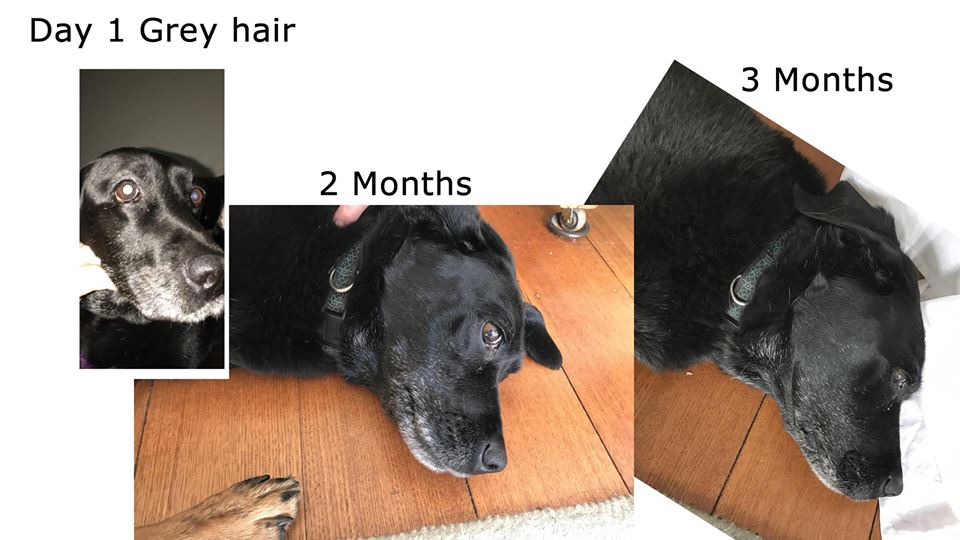
Click to enlarge image of grey hair reduction.
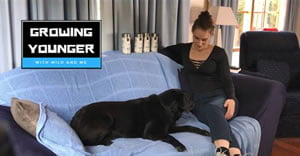
Click to enlarge Milo and Me
“Since taking the AGE Pill my overall health has greatly improved.” Katie Larking. Melbourne Australia.
AGE Pill Health Benefits
Since taking the AGE Pill I have personally experienced the following:
- My back pain has reduced *
- My hair appears darker and much thicker *
- My skin is radiant and glowing *
- The appearance of fine lines and wrinkles have smoothed out *
- Grey hair growth appears to have slowed significantly *
- My period pain has also diminished *
I feel like I am getting my life back and the future is bright. I have been waiting along time to have more energy and feel stronger. So happy to have the AGE Pill. I personally feel the AGE Pill is the best nutraceutical for skin and hair, hands down.
Seven months ago I was embarrassed to have my photo taken that included my hairline. Due to my hair being thin and patchy. See the before and after photos. Now you can clearly see a full hairline. What a massive confidence boost! That of a younger me. When I tell people my AGE they don’t believe me. They say “I swear I thought you were in your 30s!” I feel much younger than my years.
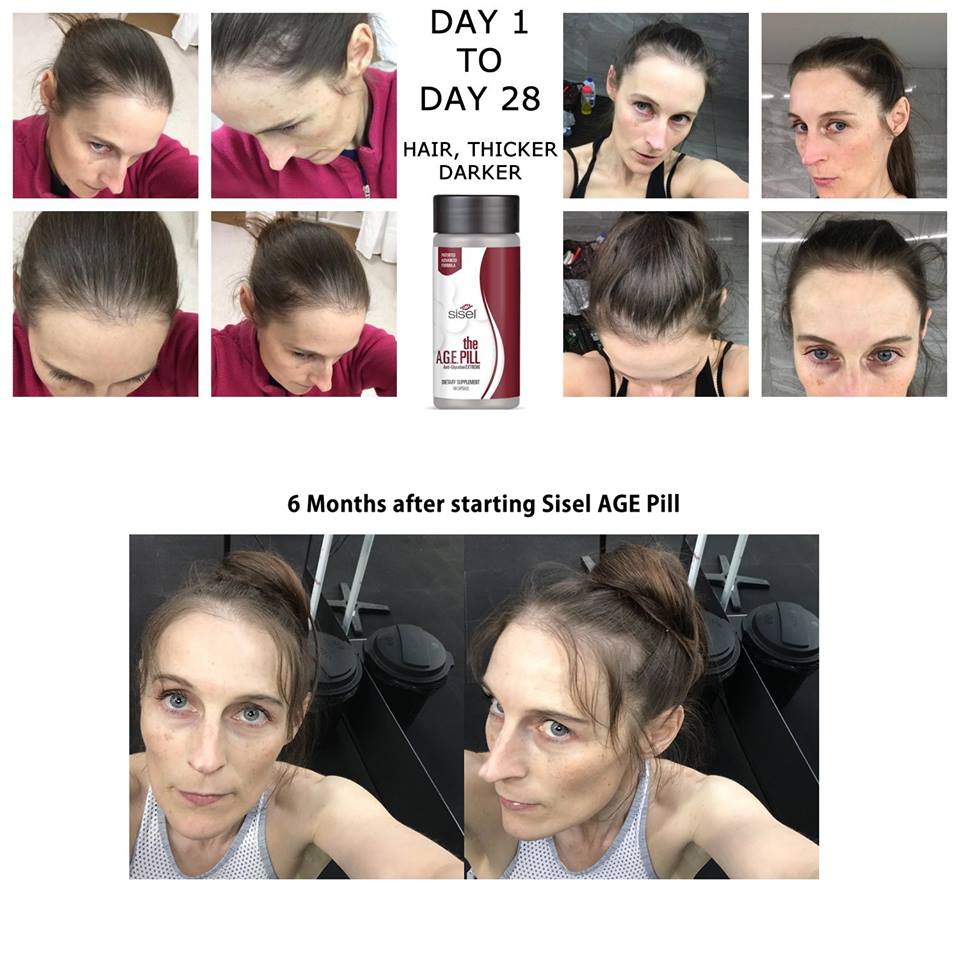
Click picture to enlarge testimonial picture
I am 43 years young and I am no longer embarrassed to have close up photos.
What’s even more important to me is what is happening on the inside. It’s great to look younger however feeling younger is just as important. For age reversing effects to be noticed on the outside, means magic is happening inside too!
Avoiding age-related diseases is important to me. So, staying as young as possible biologically is very important too.
I’m focusing on being healthy and happy 🙂 Especially after losing my Father to early onset Alzheimer’s. He was diagnosed at 54! So, you can understand my genuine passion for a product like the AGE Pill because of the life-changing results for myself, Milo and Sisel customers!
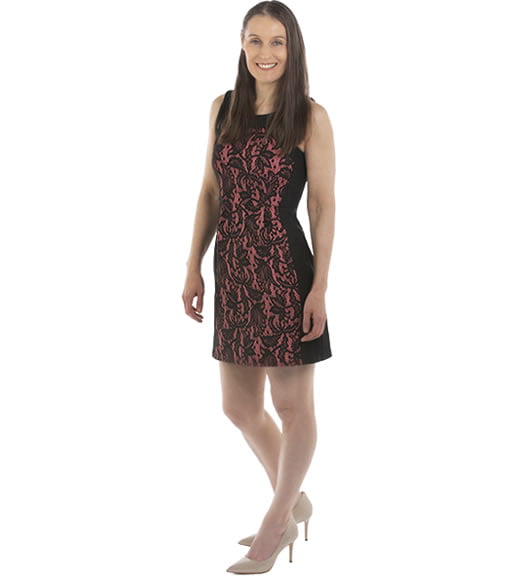
Above picture: Katie feeling fabulous since taking Sisel’s AGE Pill and TSX
Sisel Products: Australia, New Zealand, United States, Canada, Taiwan, United Kingdom, and Europe
Sisel Australia is supplying products to Australian customers direct from Sisel’s United States Manufacturing facility in Utah.
Sisel International products are also available in the following countries:
Austria
Australia
Belgium
Bulgaria
Canada
Czech Republic
Denmark
Estonia
Finland
France
Greece
Hungary
Ireland
Italy
Latvia
Lithuania
Luxembourg
Malta
Netherlands
Poland
Portugal
Romania
Slovakia
Slovenia
Spain
Sweden
Taiwan
United Kingdom
United States of America
New Zealand .
Sisel International products are drawing the attention of many health professionals. We now have Doctors, nutritionists and naturopaths on board. Health Professionals excited to share these potentially life changing products, internationally and Australia wide.
Sisel US is home to the 440 sq feet manufacturing facility, owned by Tom Mower Jr. As previously mentioned, you may be familiar with Tom Mowers’s (Sr) previous company Neways which was sold in 2006. You will find, as I have, that if you loved the Neways products (original formulas) then you will find the Sisel Products are just as extraordinary. The Tom Mower Mission is the driving force of the company and its loyal distributors. Loyalty is founded on products that work and can be trusted.
I love Tom Mower’s products as they are a unique line of scientifically advanced, superior nutraceuticals:
- SiselSafe
- Toxin Free
- Against Animal Cruelty
- Free from any potentially harmful ingredients
- Cutting edge formulas
Sisel research the research. This enables them to create scientifically advanced products that work and make a difference in people’s lives. This is the foundation for the success and growth of Sisel International.
For more information about Tom Mower and Sisel Australia products. The same products are sold in Australia, the USA and Internationally.
If you are seeking a Sisel Distributor, (or a Sisel Distributor in the USA, Canada, Taiwan, United Kingdom, New Zealand or Europe) we can help. We are ready to help you order Sisel International products, here in Australia and around the globe, See above list of countries and click on the country relevant to you. Our team can support and help you grow. From product information to business training, earning products for free, a part-time income, or wealth building.
The timing is perfect. The AGE Pill has launched Sisel into massive momentum and presents an opportunity for you to leverage off its success.
Click here to listen to Tom Mower Sr’s Age Pill Testimonial. Tom Mower Jr is the Co-Founder and CEO of Sisel International.
AGE Pill Blog | Sisel International




Last Updated on March 10, 2024 by Katie Sisel Distributor
